
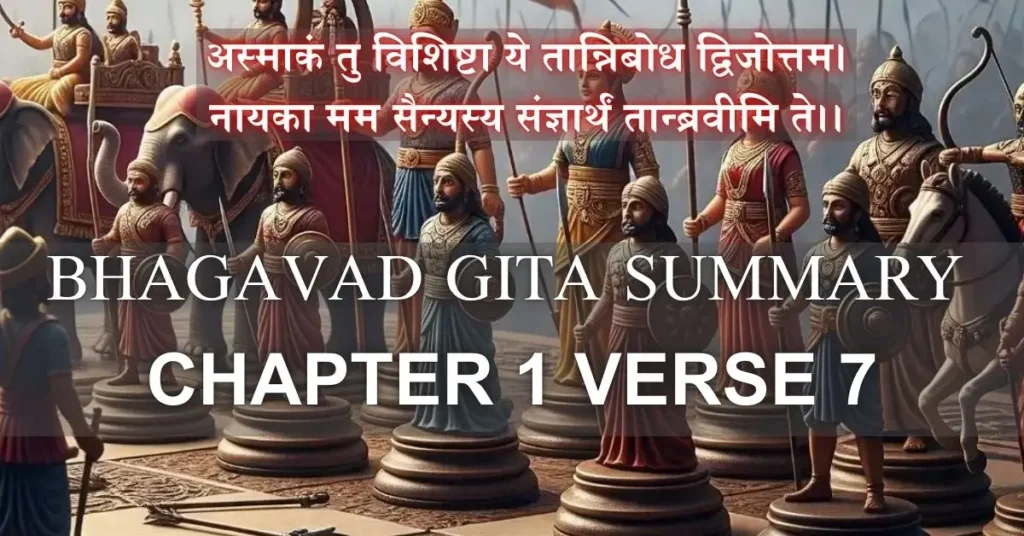
Translation of Bhagavad Gita Shloka Verse 1.7 in English:
अस्माकं तु विशिष्टा ये तान्निबोध द्विजोत्तम।
नायका मम सैन्यस्य संज्ञार्थं तान्ब्रवीमि ते।।
In English :
asmākaṁ tu viśiṣṭā ye tān nibodha Dvijottama
nāyakā mama sainyasya saṁjñārthaṁ tān bravīmi te
Full Line-by-Line Phonetic Breakdown of Bhagavad Gita Chapter 1 Verse 7:
- asmākaṁ tu viśiṣṭā ye tān nibodha dvijottama
As-maa-kam tu Vi-shish-taa ye Taan-ni-bo-dha Dwi-jo-t ta-ma - nāyakā mama sainyasya saṁjñārthaṁ tān bravīmi te
Naa-ya-kaa Ma-ma Sain-yas-ya San-gnyaa-rtham Taan-bra-vee-mi Te
“O best Brahmin, I would like to inform you about the identity of the best warriors in my army. Please listen to my description with meditation.”
Laying the Foundation: Understanding the Context
The war of Kurukshetra is not just a physical confrontation but a moral battleground. Dhritarashtra, the blind king of Hastinapura, opens synopsis the Bhagavad Gita with his question to Sanjaya, asking what is happening on the battlefield. This creates a narrative framing.
As the epic battle of Mahabharata is about to begin, Duryodhana, the Kaurava prince, approaches Dronacharya, his military commander and guru (Acharya). Instead of displaying confidence, he subtly expresses his insecurities and attempts to instill motivation in his warriors by glorifying their strength. This psychological tactics showcases Duryodhana’s leadership style, which is driven by arrogance and fear rather than wisdom and righteousness.
Bhagavad Gita summary 1.7: Power, Persuasion, and Insecurity
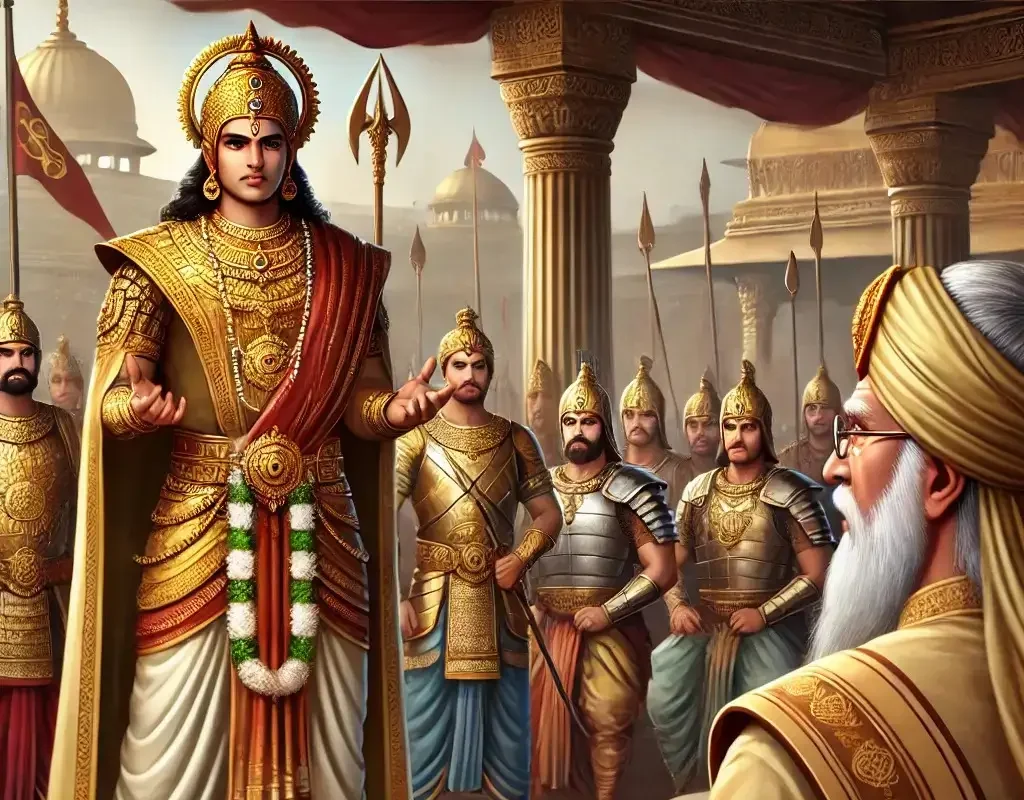
In this verse, Duryodhana continues his conversation with Dronacharya, his respected teacher. After acknowledging the strength of the Pandava army, he now shifts focus to his own side. He refers to Dronacharya respectfully as “Dvijottama” (best among the twice-born, i.e., Brahmins) and begins listing the key warriors in his army.
Duryodhana’s tone here is both strategic and diplomatic. He wants to reassure his teacher about the strength of the Kaurava forces while also finely reminding him of his duty to fight. Bhagavad Gita Chapter 1 Verse 7 sets the stage for the next few verses, where Duryodhana names powerful warriors like Bhishma, Karna, Kripacharya, and others who will lead his army into battle.
It reflects Duryodhana’s mindset—confident yet anxious—as he prepares for the great war. He tries to sound in control, but his elaborate justification hints at an underlying insecurity about the upcoming battle.
Bhagavad Gita Chapter 1 verse 7 Explained—What Makes It Profound?
Let’s Unveiled the key insights
- Leadership and Strategy: Duryodhana’s enumeration of his commanders reflects his sense of strategic importance. It also reveals a sense of boasting that often accompanies material power.
- Human Ego: Duryodhana’s tone and choice of words reflect his ego and insecurities as he seeks validation.
- Moral Questions: The Bhagavad Gita prompts readers to consider the ethical and philosophical dimensions of war. In this summary of Chapter 1.7, we can see, this verse subtly points to the inner struggles of characters like Duryodhana.
- Dynamics of Power: This verse captures the dynamics of hierarchical power and control within the Kaurava camp.
Unveiling the Verse: A Clear and Simple Breakdown of 1.7
Duryodhana, the prince of the Kauravas, is speaking to his teacher Dronacharya before the great war of Kurukshetra. After recognizing the strength of the Pandavas, he now shifts his focus to his own warriors.
Duryodhana informs Dronacharya of the prominent warriors in his army. This verse highlights Duryodhana’s attempt to display his strengths and assert his leadership. On a surface level, it portrays military preparation. On a deeper level, it unveils his underlying insecurities and desire for validation.
Ego and Ambition: What Duryodhana Reveals About Leadership

Duryodhana’s words reveal his inner conflict. Outwardly, he speaks with confidence, listing the strength of his army. However, his need to justify and reassure suggests underlying insecurity. Despite having a larger army, he fears the Pandavas, especially because righteousness (Dharma) is on their side.
His need to enumerate the leaders of his army stems from his ego and ambition. This behaviour reflects:
- Insecurity masked as confidence: Duryodhana’s pride overshadows his fear of defeat.
- Overcompensation: Highlighting strengths is often a mechanism to divert attention from weaknesses.
- Need for validation: Duryodhana subtly manipulates Dronacharya by addressing him as “Dvijottam” (best among Brahmins), reminding him of his duty and ensuring his loyalty. His address to Dronacharya, a revered teacher, indicates an inner craving for acknowledgment.
Modern psychology echoes these themes, suggesting that leaders driven by ego often struggle with authentic leadership and decision-making. Additionally, This reflects how leaders use persuasion, respect, and strategic speech to influence others.
Philosophical Unfolding of Bhagavad Gita Verse 1.7: Insights on Perception and Dharma

- Perception vs. Reality: Duryodhana’s reliance on external strength reflects ego and materialism. The Gita challenges this, emphasizing true power stems from Dharma and inner clarity.
- Ego and Validation: Despite confidence, Duryodhana seeks external validation, highlighting human insecurity. Genuine assurance arises from ethical alignment, not approval.
- Dharma and Success: Actions rooted in righteousness, not transient achievements, lead to enduring fulfillment.
- Leadership Principles: True leadership values humility over pride, empowering collective well-being.
- Modern Relevance: Success lies in moral integrity, inner peace, and ethical alignment over material gains.
Chapter 1.7 Through a Historical Lens: Leadership in Ancient India
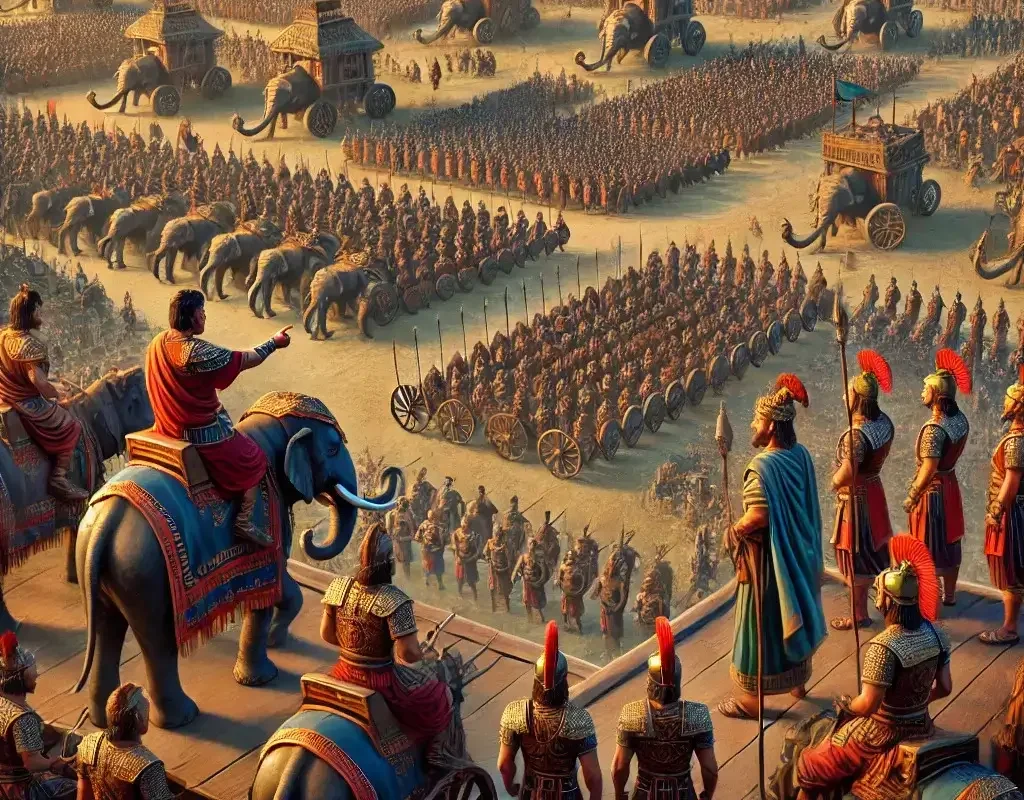
From a historical standpoint, this verse provides insights into military traditions of ancient India. Before battles, it was common for leaders to assess and announce their key warriors. The Kauravas had a vast army with great warriors like Bhishma, Karna, and Drona, making them seemingly superior to the Pandavas. However, despite having more power, the Kauravas ultimately lost, showing that strength without righteousness leads to downfall. In this journey of Bhagavad Gita summary 1.7 reflects the ancient Indian belief that wars should not just be fought for power but for Dharma (righteous duty).
A Spiritual Treasure: What Chapter 1.7 Teaches Us
The Bhagavad Gita Chapter 1 Verse 7 is not merely a recounting of military preparation—it is a spiritual lens through which we can examine our inner struggles and seek transformation. On the Kurukshetra battlefield, Duryodhana’s perspective teaches us invaluable lessons that transcend the literal context of war and delve deep into the realms of human nature, ego, and the path of spiritual growth.
Breaking Down the Spiritual Messages:
Ego vs. Wisdom: Ego drives pride, but wisdom encourages humility.

Ego is like a flame—it may seem bright, but it consumes and blinds us to the truths around us. Duryodhana’s actions in this verse of the Bhagavad Gita show how pride can drive individuals to seek recognition and validation, even at the expense of greater wisdom. Wisdom, however, is rooted in humility. It allows us to see beyond fleeting desires, guiding us toward inner peace and ethical clarity.
Power vs. Virtue: Material strength is fleeting; true power lies in ethical and spiritual integrity.
Bhagavad Gita Chapter 1 Verse 7 highlights the transient nature of material strength. Duryodhana’s confidence in numbers and his show of force mask his inner insecurities. True power, as the Bhagavad Gita emphasizes, lies in virtues such as integrity, compassion, and self-awareness. These qualities form the foundation of lasting success and spiritual fulfillment, unlike the momentary triumphs born of ego-driven ambition.
Preparation with Intention: Insecurity lack strength, preparation empowers us.
The way we prepare for challenges reflects the state of our mind and soul. Actions fuelled by insecurity, as demonstrated by Duryodhana, are inherently fragile and lack substance. On the other hand, preparation rooted in clarity, purpose, and righteousness empowers us, ensuring that our endeavours are not only effective but meaningful.
This verse reminds us that in life, we often focus too much on external power (money, people, influence) while ignoring spiritual strength (truth, integrity, and inner peace). True victory comes when we align with Dharma (righteousness) rather than just material success.
The Final Reflection: Ego, Leadership, and Timeless Wisdom
This verse, though simple on the surface, holds deep layers of meaning—it showcases leadership psychology, historical military strategies, philosophical reflections on strength, and spiritual insights on righteousness. It teaches us that real power is not just in external strength but in alignment with truth and purpose.
Wisdom for the Modern World: The Relevance of Chapter 1.7
Duryodhana’s conflict mirrors the struggles we face in our daily lives. Like Duryodhana, we often project confidence and success externally while battling insecurities or doubts internally. For example:
- Overcompensation in Workplaces: Sometime we may exaggerate our achievements or skills to gain validation, masking our fears of lack or failure.
- Social Media Personas: Many curate their lives to appear perfect online, even when they are dealing with personal challenges or uncertainties offline.
- Relationships and Trust: Sometimes, We emphasize our emotional strength in front of loved ones but privately struggle with helplessness or fear of rejection.
Just as Duryodhana’s boldness is a defence mechanism against his fear of the Pandavas’ moral advantage, people often use external displays of strength to protect themselves from their perceived weaknesses. This tension between appearance and reality is a universal theme in both epic narratives and modern life. Do you see this pattern in other examples from literature or psychology?
Please let me know in the comment .
Dive deeper into the Bhagavad Gita Chapters with us to uncover its timeless wisdom and practical guidance. Let its verses inspire you to cultivate inner clarity, align with higher values, and navigate life’s challenges with courage and grace.
Faqs :
What is the main message of Bhagavad Gita Chapter 1.7 ?
Bhagavad Gita 1.7 highlights Duryodhana’s insecurity and manipulation, teaching us about the importance of wisdom over arrogance in leadership.
How does Bhagavad Gita 1.7 relate to modern life ?
The verse teaches valuable leadership lessons, warning against ego-driven decisions and the importance of ethical conduct as we can see in our above discussion.
What psychological insights can be drawn from this verse ?
Duryodhana’s mindset reflects pride, fear, and manipulation, showcasing how ego can cloud judgment and lead to downfall.
How can one apply the teachings of Bhagavad Gita 1.7 in daily life ?
By practicing humility, self-awareness, and ethical leadership, one can lead a life of righteousness and wisdom.
What is the spiritual significance of this verse ?
It emphasizes that true strength lies in righteousness and wisdom, rather than in material power or manipulation.
How to Avoid a Duryodhana-like Mindset ?
Practice humility and gratitude. Acknowledge strengths but do not underestimate others. Seek wisdom from mentors rather than using them for personal gain.